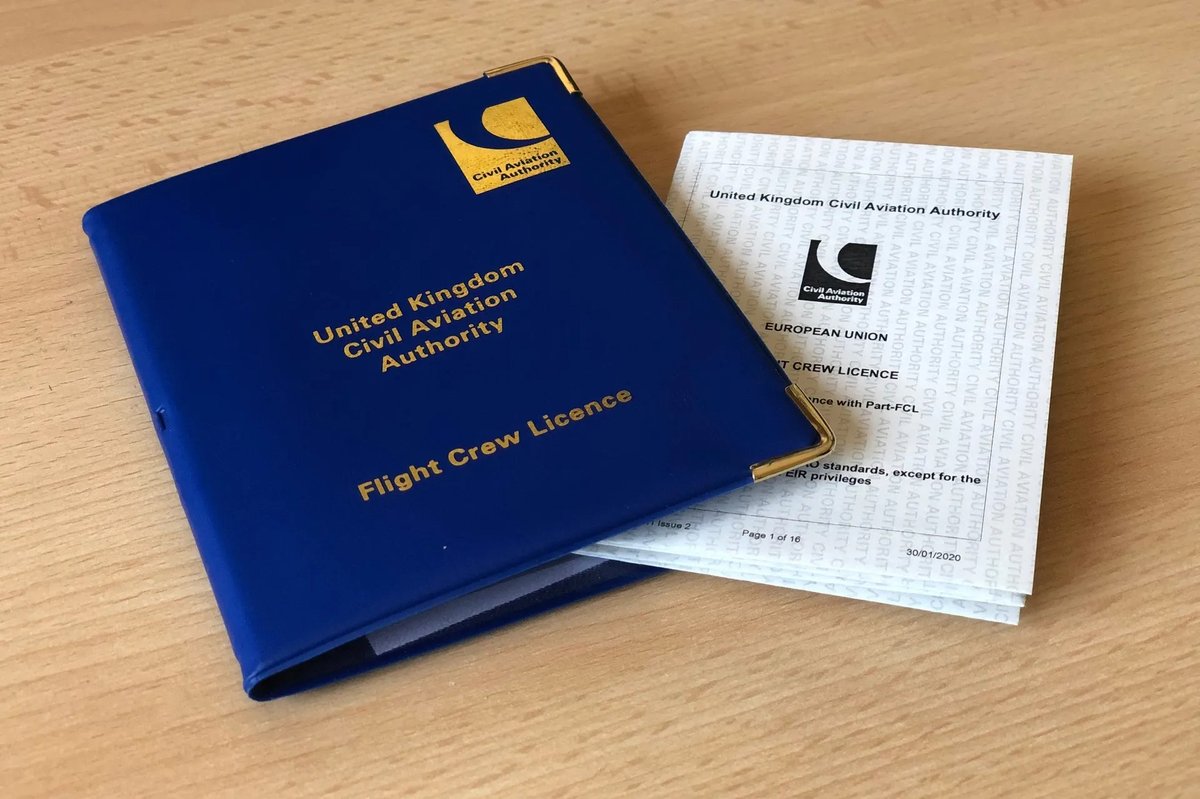
Your Flight Path to Swiss Skies: Navigating Robinson Pilot Training & Licensing in Switzerland
So, you've set your sights on the magnificent Swiss skies, perhaps dreaming of soaring over snow-capped peaks or navigating pristine valleys. And "Robinson Pilot Training & Licensing (Switzerland)" has caught your eye, hinting at a specific type of aircraft that's often synonymous with precision and versatility. Whether you envision yourself piloting a sleek helicopter or a nimble fixed-wing aircraft, embarking on a pilot career in Switzerland is an exhilarating journey.
But let's clarify something crucial upfront: while "Robinson" refers to a renowned aircraft manufacturer (primarily known for its popular helicopters, though they've also ventured into fixed-wing designs), the licensing process itself in Switzerland follows a broader, standardized framework. You don't get a "Robinson License"; you earn a Private Pilot License (PPL), a Commercial Pilot License (CPL), or an Airline Transport Pilot License (ATPL) for a specific aircraft category (like aeroplanes or helicopters), and then you get a type rating for a particular aircraft model, such as a Robinson R22 or R44.
This comprehensive guide will demystify the entire path, outlining the requirements, stages, and practical steps to becoming a licensed pilot in Switzerland. While the core licensing information provided here leans towards aeroplane pilot training (as per standard EASA-aligned curricula in Switzerland), the foundational steps, medical requirements, and school selection processes are broadly applicable to both aeroplane and helicopter aspirants. Understanding this general framework is your first critical step, regardless of whether a Robinson is your ultimate cockpit goal.
At a Glance: Key Takeaways for Aspiring Swiss Pilots
- Goals First: Determine your aviation objective – flying for recreation (PPL), professionally (CPL), or as an airline captain (ATPL).
- Minimum Age: You can start training at 16, but need to be older for certain licenses (e.g., 17 for PPL, 18 for CPL).
- Medical Mandatory: A Class 2 (PPL) or Class 1 (CPL/ATPL) medical certificate is required before starting flight training.
- Education: A high school diploma is generally the minimum, but advanced programs might require more.
- English Proficiency: Essential for international aviation (Level 4 minimum recommended).
- Training Stages: Progress from Student Pilot to PPL, CPL, and potentially an ATPL, often adding Instrument and Multi-Engine Ratings along the way.
- School Selection: Choose from flight schools, college programs, airline cadet schemes, or the Swiss Air Force, carefully considering budget, aircraft type, and career goals.
- Costs Vary Widely: Be prepared for significant investment, which depends on license type, school, and training pace.
The Swiss Skies Await: Setting Your Course
Switzerland, with its robust aviation industry and breathtaking landscapes, offers an exceptional environment for pilot training. Becoming a pilot here is a structured journey, designed to ensure the highest safety and competency standards. Before you even touch a joystick, you'll need to define your ambition. Are you dreaming of weekend leisure flights with friends, a career as a corporate pilot, or commanding a large passenger jet? Your answer dictates the license path you'll pursue.
For those specifically interested in a Robinson aircraft, remember that these are tools. The foundational license (e.g., Private Pilot License for Helicopters, PPL(H), or Aeroplanes, PPL(A)) comes first, equipping you with the fundamental skills of flight. Only after achieving this will you pursue a specific "type rating" for an aircraft like the Robinson R22 or R44 helicopter, tailoring your skills to that particular machine.
Laying the Foundation: What You Need Before You Start
Before you even step into a flight school, there are some fundamental boxes to tick. These ensure you're medically fit, of appropriate age, and possess the basic cognitive abilities to embark on this demanding yet rewarding path.
1. Meeting the Basic Requirements
- Minimum Age: You can begin your pilot training as early as 16 years old. However, specific licenses have higher age requirements: 17 for a PPL and 18 for a CPL.
- Medical Certificate: This isn't just a recommendation; it's a mandatory prerequisite. You'll need to pass an aero-medical examination to obtain either a Class 2 Medical Certificate (for PPL) or a Class 1 Medical Certificate (for professional pilot licenses like CPL or ATPL). Flight schools can guide you in arranging this with a certified Aero-Medical Examiner (AME). Don't let minor issues deter you; many common conditions, even with glasses, are acceptable, but only an AME can make the final determination.
- Educational Background: A minimum of a high school diploma or equivalent is typically required. More advanced programs, especially those integrated with college degrees or airline cadet schemes, may require specific grades or a federal vocational baccalaureate.
- English Proficiency: English is the universal language of aviation. A solid command of English, ideally at least Level 4 (Operational) standard according to ICAO (International Civil Aviation Organization) ratings, is highly recommended and often a prerequisite for international operations and advanced training.
- Maximum Age for Airline Pilots: While there's no upper age limit to start training, commercial airline pilots typically retire at 65 years old.
2. Researching Flight Training Options
Switzerland offers a diverse landscape for flight training, catering to various ambitions and budgets. Understanding these options is crucial for making an informed decision.
- Flight Schools (FTOs): With approximately 60 flight schools across Switzerland, you have plenty of choices. These range from smaller, local operations offering PPL courses to larger academies providing comprehensive CPL and ATPL integrated programs. Be aware that tuition fees, enrollment procedures, and specific program structures can vary significantly.
- Aviation-related College Degree Programs: For those seeking a blend of academic rigor and practical flight skills, some universities or colleges offer degree programs combined with flight training, often culminating in a CPL. This path provides a strong academic foundation alongside pilot certification.
- Airline Cadet Pilot Programs: Often sponsored or run in partnership with major airlines (like the Lufthansa Group's European Flight Academy, which we'll delve into later), these programs are highly competitive but offer structured training and often guarantee employment upon successful completion of your ATPL course.
- Swiss Air Force (Military): If a career in military aviation appeals to you, the Swiss Air Force offers government-sponsored flight training. This path comes with a significant commitment, typically around 12 years of military service post-completion, before a potential transition to commercial aviation.
The Path to the Cockpit: Swiss Pilot Licenses Explained
The journey to becoming a fully licensed pilot involves several distinct stages, each building upon the last. These licenses are standardized across EASA (European Union Aviation Safety Agency) member states, meaning your Swiss license holds broad international recognition. As previously noted, the detailed requirements below specifically pertain to aeroplane pilot licensing, which forms the general framework for pilot certification in Switzerland. Helicopter licensing follows a similar structure but has different specific hour requirements.
1. Student Pilot License (SPL)
This is your very first step into the cockpit. The SPL allows you to commence flight training under the supervision of a certified flight instructor. It's essentially your permit to learn, enabling you to log flight hours and progress towards your first solo flight.
2. Private Pilot License (PPL) – The Freedom to Fly
The PPL is your gateway to recreational aviation. It permits you to fly solo, carry passengers, or transport cargo, but strictly without receiving monetary compensation. It's the license for personal freedom in the skies.
- Requirements for PPL(A) (Aeroplanes):
- Age: Minimum 17 years old by the time of license issuance.
- Flight Time: At least 45 hours of flight instruction.
- This can include up to 5 hours in a Flight Simulation Training Device (FSTD).
- At least 25 hours must be dual instruction (with an instructor).
- At least 10 hours must be supervised solo flight time.
- Within these 10 solo hours, you'll need 5 hours of solo cross-country flight.
- This includes at least one solo cross-country flight covering 270 km (150 NM), with two full-stop landings at different aerodromes other than your departure point.
- Examinations: Pass theoretical exams (e.g., Air Law, Human Performance, Navigation) and a practical flight test.
3. Commercial Pilot License (CPL) – Your Professional Wings
The CPL is your ticket to earning a living as a professional pilot. This license opens doors to careers like charter flying, corporate aviation, flight instruction, or as a co-pilot for certain commercial operations.
- Requirements for CPL(A) (Aeroplanes):
- Age: Minimum 18 years old.
- Flight Time: Minimum 150 total flight hours (if completing an integrated ATPL course, this is often higher, around 200 hours).
- Up to 5 hours of instrument ground time can count.
- At least 80 hours of dual instruction (up to 5 hours instrument ground time).
- At least 70 hours as Pilot in Command (PIC) – this can include up to 55 hours as Student Pilot in Command (SPIC).
- 20 hours of cross-country flight as PIC, including one VFR flight covering at least 540 km (300 NM) with two full-stop landings at different aerodromes.
- 5 hours of night flight, including 3 hours dual instruction, 1 hour of night cross-country navigation, and 5 solo take-offs and 5 solo full-stop landings.
- 10 hours of instrument flight instruction (up to 5 hours instrument ground time).
- 5 hours in a multi-person, variable pitch, retractable gear aeroplane to prepare for more complex aircraft operations.
- Examinations: Pass advanced theoretical examinations and a comprehensive practical flight test.
Add-On Ratings: Enhancing Your Capabilities
As you progress, you'll likely want to add ratings to your license, significantly expanding your flying capabilities.
- Instrument Rating (IR): This crucial rating allows you to fly solely by reference to instruments, enabling operations in various weather conditions, including low visibility or clouds, where visual flight rules (VFR) are not possible. It can be integrated into CPL training or obtained separately.
- Multi-Engine Rating (MER): Qualifies you to fly aircraft with more than one engine. Essential for most commercial operations and often combined with IR training.
4. Airline Transport Pilot License (ATPL) – The Apex of Pilot Certification
The ATPL is the highest level of pilot certification, qualifying you to act as Pilot in Command (Captain) of aircraft in commercial air transport operations, such as scheduled airline services. Most aspiring airline pilots pursue an "ATPL frozen," meaning they complete the ATPL theory and CPL/IR flight components, and the "frozen" status unfreezes once they accumulate the required flight hours for the full ATPL.
- Requirements for ATPL(A) (Aeroplanes):
- Age: Minimum 21 years old.
- Prerequisites: Hold an MPL (Multi-crew Pilot License) or CPL(A) with a multi-engine IR.
- Flight Time: Minimum 1,500 hours of flight time in aeroplanes.
- Includes 500 hours in multi-pilot operations (flying with a co-pilot).
- 500 hours as PIC under supervision, OR 250 hours as PIC, OR 250 hours with 70 hours as PIC and the remainder as PIC under supervision.
- 200 hours of cross-country flight (at least 100 hours as PIC or PIC under supervision).
- 75 hours of instrument time (with a maximum of 30 hours in instrument ground time).
- 100 hours of night flight as PIC or co-pilot.
- Up to 100 hours of flight time can be in an FFS (Full Flight Simulator) and FNPT (Flight and Navigation Procedures Trainer), with a maximum of 25 hours in an FNPT.
- Examinations: Pass comprehensive ATPL theoretical exams and a final skill test.
Robinson Aircraft and Type Ratings
Now, back to the "Robinson" aspect. Once you've earned a foundational license (e.g., a PPL(H) for helicopters or PPL(A) for aeroplanes, though Robinson's most popular models are helicopters), you would then undertake specific training for a type rating on a particular Robinson model. This training focuses on the specific systems, performance, and operational procedures of that aircraft. For example, a pilot with a PPL(H) would undertake additional training to get an R22 type rating, and then further training for an R44 type rating, as they are different aircraft types. This ensures proficiency and safety in the specific cockpit you'll be operating.
Choosing Your Flight Path: Schools & Programs in Switzerland
Selecting the right flight school is one of the most critical decisions you'll make. It impacts your training quality, cost, and potentially your career trajectory.
Key Decision Factors:
- Your Long-Term Pilot Goals: A local PPL school might suffice for recreational flying. For an airline career, you'll need an ATPL-focused academy. Research airline hiring trends and whether schools have partnerships that could ease your transition into the industry.
- Budget & Funding: Pilot training is a significant investment. Costs vary wildly (tens of thousands for PPL to well over 100,000 CHF for ATPL). Inquire about financial assistance, loan options, or part-time programs that allow you to work while you train.
- Time Commitment: Do you envision full-time immersion or a more flexible, part-time schedule? Full-time programs accelerate your progress but demand undivided attention. Part-time options can extend the training duration, potentially increasing overall costs due to recurring fees or inflation.
- Aircraft Fleet & Maintenance: Investigate the types of aircraft the school uses for training. Are they modern, well-maintained, and suitable for the licenses you're pursuing? A robust maintenance center indicates a strong commitment to safety and operational reliability.
- School Culture & Reputation: Visit shortlisted schools. Speak with current students, instructors, and management. Ask about their training philosophy, safety policies, instructor-to-student ratio, and graduate success rates. A school's reputation and the support network it offers can make a significant difference.
A Deep Dive: The European Flight Academy (EFA) Model
For those aiming for an airline career within the Lufthansa Group (which includes SWISS and Edelweiss), the European Flight Academy (EFA) in Switzerland (and Germany) offers a highly structured and competitive pathway. Their selection process is rigorous, designed to identify candidates with the highest potential.
EFA Application Requirements:
- Language Proficiency:
- English: Fluent, minimum B2 level. This can be validated via DLR certificate (A/B rating), SPHAIR certificate (meeting commercial pilot requirements), or accepted B2 certificates like Cambridge, GMAT, IELTS, LCO, TELC, TOEFL, TOEIC, AKAD Language + Culture Test.
- German: Minimum B2 level.
- Italian or French: Preferable, indicating a broader linguistic capability often valued in a multinational airline environment.
- Age: Minimum 17 years old to apply.
- Nationality / Passport: CH (Swiss), EFTA, or EU-citizens are accepted. (Note: For EU-27 citizens, there are no restrictions; Croatia requires a Swiss settlement permit C).
- Education / Degree: You'll need a general entrance qualification for higher education, a Federal Vocational Baccalaureate, university of applied sciences admission, or an Eidgenössisches Fähigkeitszeugnis (EFZ).
- Further Requirements:
- DLR or SPHAIR Certificate: Required at the start of your application.
- Military/Civilian Service (for Swiss citizens): Completion of compulsory military service (Rekrutenschule) or civilian service ("langer Einsatz") before training commences.
- Height: Between 160 cm and 198 cm.
- Aero-Medical Fitness Certificate: Not required at the very start of the application process; it's one of the final steps.
The EFA Selection Process: A Multi-Stage Gauntlet
- DLR or SPHAIR Certificate: Your journey begins by demonstrating core aptitudes.
- DLR Test: Register for the computer-based DLR (German Aerospace Center) Test in Hamburg, Zurich, or Milan. This comprehensive assessment evaluates memory, spatial awareness, mathematical and technical comprehension, English proficiency, attention, psychomotor skills, teamwork, multitasking abilities, and personality traits. A defined minimum rating is essential for EFA application, and costs are self-covered.
- SPHAIR Program: Graduates of the Swiss SPHAIR program can apply directly with their SPHAIR Certificate, often streamlining parts of the process.
- Application at EFA: Once you have the required DLR or SPHAIR Certificate, you can submit your official application to the European Flight Academy.
- Lufthansa Group Assessment Center: This involves a personal assessment, typically held by Interpersonal GmbH (Hamburg) or the SWISS Flight Crew Assessment Center (Zurich). It includes interviews, group exercises designed to test teamwork and problem-solving, and further psychomotor skills evaluations.
- Pre-Airline Fit: This additional step is crucial for potential funding benefits from SWISS and Edelweiss. A favorable decision, known as a "board positive," is required and includes an airline-specific conversation to assess your suitability for their culture and operational environment. SPHAIR course graduates with a "standard" or higher flying ability rating are often exempt from a simulator exercise at this stage.
- Aero-Medical Fitness Examination: The final hurdle. After successfully navigating the selection process, you'll undergo a thorough medical examination, including a drug screening. This aims to verify a normal level of fitness and will lead to an EASA Class 1 medical certificate if successful. As mentioned, weak eyesight (with correction) can be acceptable, but the ultimate decision rests with the AME.
Beyond Training: Your Pilot Career in Switzerland
Successfully completing your training and securing your pilot license opens up a world of career possibilities. Switzerland's diverse economy and geographic position make it a hub for various aviation sectors.
- Airline Pilot: The dream for many. You could fly for major carriers like SWISS or Edelweiss, or regional airlines, transporting passengers across continents or within Europe.
- Corporate/Business Aviation: Piloting private jets for companies or high-net-worth individuals, offering flexible schedules and often operating into smaller, more exclusive airports.
- Cargo Pilot: Flying freight for logistics companies, a vital link in global supply chains.
- Charter/Air Taxi: Providing on-demand air transport services, from executive travel to scenic flights.
- Flight Instructor: Share your passion and knowledge by teaching the next generation of pilots. This is an excellent way to build hours and consolidate your own flying skills.
- Medical/Air Ambulance: Flying critical patients or medical supplies, often in challenging conditions, making a direct impact on people's lives.
- Agricultural Pilot: While less common in Switzerland's mountainous terrain, this involves crop dusting or specialized aerial applications in certain agricultural regions.
The key to a successful career post-training, especially for the competitive airline sector, is to perform exceptionally during your flight school, build a strong network, and continuously enhance your skills. For those who complete the EFA program, a final "Airline Fit" interview evaluates your experiences and performance at flight school, potentially leading to an employment agreement with a Lufthansa Group airline. You can explore more about regional aviation and career prospects by visiting the Robinson Swiss hub.
Common Questions & Misconceptions
"Is a 'Robinson Pilot License' different from a regular pilot license?"
No. As clarified earlier, you obtain a general pilot license (e.g., PPL(A) for aeroplanes, PPL(H) for helicopters) based on EASA standards. A "Robinson" is a specific type of aircraft (e.g., R22 helicopter), and you then get a "type rating" for that specific model, allowing you to fly it.
"Is pilot training in Switzerland more expensive than elsewhere?"
Switzerland generally has a higher cost of living and, consequently, training. However, the quality of instruction, regulatory oversight, and potential career opportunities within Switzerland's strong aviation sector can justify the investment. It's crucial to compare total costs, including accommodation and living expenses, if you're considering training abroad.
"Can I get a pilot license with poor eyesight?"
Many people believe perfect vision is required, but this is a misconception. Corrective lenses (glasses or contacts) are perfectly acceptable, provided your corrected vision meets the required standards during your aero-medical examination. The specific limits are determined by the Aero-Medical Examiner (AME).
"How long does it take to become an airline pilot?"
From starting PPL to being ready for an airline First Officer position, the process can take anywhere from 1.5 to 3 years for an accelerated, integrated ATPL program, followed by additional time to gain experience and secure a job. The military path is significantly longer due to service commitments.
"Do I need to speak German to train in Switzerland?"
While English is the international language of aviation, and many flight schools offer instruction in English, proficiency in a national language (German, French, or Italian) is a significant advantage, particularly for ground-based interactions, daily life, and is a requirement for some advanced programs like EFA.
Your Next Co-Pilot: Taking the First Step
Embarking on a pilot training journey in Switzerland is a significant undertaking, but it's one that promises unparalleled rewards. The skies over the Alps are calling, and with careful planning and dedicated effort, you can answer that call. Start by defining your goals, assessing your eligibility, and thoroughly researching flight schools that align with your aspirations. Contacting schools directly, visiting their facilities, and speaking with instructors and students will provide invaluable insights.
The path from aspiring aviator to licensed pilot is challenging but immensely fulfilling. With the right preparation and a clear vision, you'll soon be navigating the Swiss skies with confidence and skill, ready for whatever aerial adventures await.