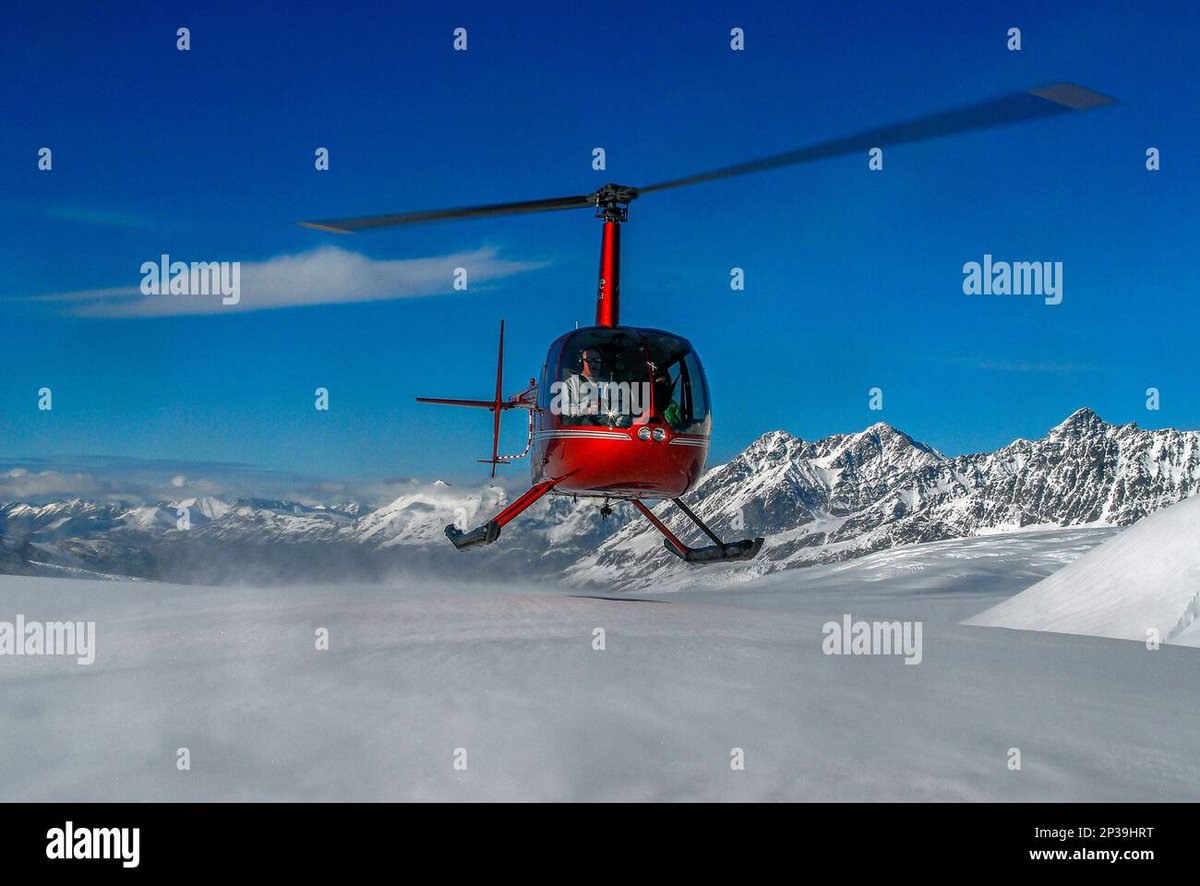
The crisp, clean air of the mountains calls to pilots, offering unparalleled views and a unique challenge. But when you talk about operating helicopters in these breathtaking alpine environments, especially at high altitudes, the conversation quickly turns to performance. Specifically, for many operators and enthusiasts, understanding Robinson Helicopter Performance in Alpine Environments is a critical topic. While Robinsons are celebrated for their reliability, cost-effectiveness, and ease of operation, the thin air and demanding conditions of high-altitude mountain flying present a distinct set of considerations that require careful attention.
Flying any helicopter in the mountains is an exercise in meticulous planning and respect for physics, but with Robinson's popular R22, R44, and R66 models, it's about knowing their inherent design strengths and, crucially, their operational boundaries. This guide will take a deep dive into what pilots need to understand to safely and effectively operate Robinson helicopters when the ground starts getting closer to the clouds.
At a Glance: Robinson Helicopters in the High-Altitude Alpine
- Density Altitude is Key: Performance degradation is the primary challenge; hotter temperatures and higher altitudes significantly reduce available power and lift.
- Piston vs. Turbine: R22 and R44 (piston engines) are more sensitive to density altitude than the R66 (turbine engine), though all are affected.
- Operational Limits: Robinson helicopters typically have a maximum operating altitude of 14,000 feet PA (Pressure Altitude) for sustained flight. This is a critical regulatory and performance limit.
- Payload Reduction: You'll carry less fuel, fewer passengers, or less cargo as altitude increases. It's not just about engine power; it’s about rotor system efficiency in thin air.
- Meticulous Planning: Performance charts, weight and balance calculations, and a thorough understanding of mountain weather are non-negotiable.
- Pilot Skill: Experience in mountain flying is paramount, as is sound judgment and conservative decision-making.
The Unforgiving Air: Understanding Alpine Challenges for Helicopters
Mountain flying isn't just "flying higher." It introduces a complex interplay of atmospheric conditions, terrain features, and operational demands that radically alter an aircraft's capabilities. For a helicopter, this means confronting the nemesis of lift: density altitude.
Density altitude isn't merely the height above sea level; it's the pressure altitude corrected for non-standard temperature. In the mountains, you'll frequently encounter high elevations coupled with warm temperatures. This "hot and high" scenario leads to air that is significantly less dense, meaning:
- Reduced Engine Power: Both piston and turbine engines produce less power in less dense air. For piston engines, this effect is often more pronounced as they rely on a fixed volume of air intake.
- Less Rotor Blade Efficiency: The rotor blades, responsible for generating lift, simply have less air to "bite" into. This reduces the amount of lift they can produce and requires a higher power setting to maintain the same performance.
- Decreased Cooling: Less dense air is also less effective at cooling engines and other critical components, potentially leading to overheating issues.
The practical consequence for a pilot is a substantial reduction in climb rate, hover performance, and overall maneuverability. A helicopter that feels spritely at sea level might feel sluggish and underpowered at 10,000 feet on a warm day. This is why a precise understanding of your helicopter's performance charts in the Pilot's Operating Handbook (POH) is not just recommended, but essential for survival in alpine environments.
Robinson's Core Philosophy and High-Altitude Design
Robinson Helicopter Company's success stems from its commitment to producing efficient, reliable, and cost-effective helicopters, primarily for private owners, flight training, and light utility work. Frank Robinson's design philosophy prioritized simplicity, low maintenance, and affordability. This has resulted in a fleet that is incredibly popular worldwide.
However, this philosophy also means Robinson helicopters are not inherently designed to be "hot and high" specialists in the same vein as larger, more powerful utility helicopters. While capable of operating in alpine regions within their specified limits, their design choices (like two-bladed rotor systems and, for the R22/R44, piston engines) mean pilots must be acutely aware of performance envelopes.
Their relatively lighter airframes and aerodynamic fuselages, as noted for the R44 Raven II, optimize airspeed and fuel economy, which are great for general cross-country flights. But in thin air, even an aerodynamic advantage has its limits when power and lift are the primary constraints.
The Models: R22, R44, and R66 in the Mountains
Each Robinson model brings its own characteristics to high-altitude operations.
Robinson R22 Beta II: The Trainer's Edge, The Mountain's Challenge
The R22 is the smallest and lightest of the Robinson fleet, and a legendary training aircraft. Its simplicity and responsiveness make it excellent for learning. However, in alpine environments, its limitations become most apparent.
- Engine: Lycoming O-360 series, a piston engine.
- Performance Impact: The R22's smaller engine and lighter gross weight are significantly impacted by density altitude. It has the least power margin of the three models, making careful weight and balance calculations absolutely critical.
- Maximum Operating Altitude: Like its bigger piston sibling, the R22 has a maximum operating altitude of 14,000 feet Pressure Altitude (PA). Attempting to operate at or near this limit, especially on a warm day and with any significant payload, requires extreme caution and a thorough understanding of performance charts.
Pilots flying the R22 in the mountains must be highly proficient in confined area operations, recognize subtle power changes, and have a conservative approach to go/no-go decisions.
Robinson R44 Raven II: More Power, Still Piston
The R44 Raven II offers a step up in performance and capacity from the R22, making it popular for personal transport, touring, and some light utility work.
- Engine: Lycoming IO-540, a six-cylinder, fuel-injected piston engine, derated to 245 HP for takeoff and 205 HP continuous.
- Performance Impact: While more powerful than the R22, the R44's piston engine still suffers significant performance degradation with increasing density altitude. The "derated" nature means it doesn't utilize its engine's full sea-level potential, which is a design choice for longevity and reliability, but doesn't magically overcome the physics of thin air.
- Maximum Operating Altitude: The R44II also has a maximum operating altitude of 14,000 feet PA. Its larger capacity means a greater potential for exceeding performance limits if pilots are not diligent with weight and balance and performance planning.
- Considerations: Carrying the maximum gross weight of 2,500 lb (1,134 kg) at 10,000 feet on a warm day will drastically reduce hover performance and climb rate compared to operating at lower altitudes. Pilots must plan for substantial payload reductions.
The R44, despite its increased power, still demands the same rigorous approach to alpine flying as the R22, albeit with a slightly larger margin of error within its limits.
Robinson R66 Turbine: A Step Up, But Not a "Hot & High" King
The R66 introduced a turbine engine to the Robinson lineup, offering a significant performance boost over its piston predecessors. This makes it the most capable of the three for high-altitude operations within the Robinson family.
- Engine: Rolls-Royce RR300 turboshaft.
- Turbine Advantage: Turbine engines generally maintain more power at higher altitudes and temperatures compared to piston engines because they compress air before combustion. This means the R66 will feel more powerful and maintain better performance margins in high-altitude conditions than the R22 or R44.
- Performance Impact: While superior to the piston models, the R66 is still subject to the laws of physics. Its power output and rotor efficiency will still degrade in less dense air. The turbine engine does provide a more consistent power delivery, which can be a psychological comfort, but it does not make the aircraft immune to density altitude.
- Maximum Operating Altitude: The R66 shares the same maximum operating altitude of 14,000 feet PA for continuous operations, similar to the R22 and R44. While the engine might be capable of providing power beyond this, the airframe and rotor system, combined with certification limits, dictate the practical operational ceiling. Pilots must refer to the POH for specific conditions.
The R66 is undoubtedly the most suitable Robinson for alpine flying, offering better margins and smoother operation. However, it's crucial not to mistake its turbine power for unlimited high-altitude capability. It still operates within a distinct envelope, very different from dedicated "hot and high" utility helicopters like the Airbus AS350 B3e/B3+. For those needing extreme high-altitude capabilities, such as the world-record-holding AS350B3e which can reach 23,000 ft, a different class of helicopter is required. You can learn more about specialized options and general helicopter operations by exploring resources like Robinson Swiss.
Essential Operational Practices for Alpine Robinson Flying
Successfully and safely operating a Robinson helicopter in alpine environments boils down to a few core principles: rigorous planning, conservative decision-making, and continuous skill refinement.
1. Master Your POH and Performance Charts
This is not a suggestion; it's a mandate. Every Robinson helicopter pilot operating in the mountains must intimately understand their aircraft's Pilot's Operating Handbook (POH) and its performance charts. These documents, regularly updated by Robinson Helicopter Company (with recent revisions available across various models and supplements), provide the precise data you need.
- Weight and Balance: Calculate this for every flight, considering fuel, passengers, and cargo. In high-altitude environments, even a slight overload can be catastrophic.
- Hover Performance: Determine your maximum hover altitude in ground effect (HIGE) and out of ground effect (HOGE) for your anticipated density altitude, weight, and temperature. This dictates your ability to take off and land safely in confined areas.
- Climb Performance: Understand your expected climb rate. A low climb rate can be dangerous if you need to quickly clear obstacles or escape downdrafts.
- Fuel Consumption: Plan for higher fuel consumption during hovering and climbing in less dense air. Always carry adequate reserves, even if it means reducing payload.
2. Respect Mountain Weather
Mountain weather is notoriously fickle and can change rapidly.
- Wind: Expect mechanical turbulence, updrafts, and downdrafts. Learn to read terrain features to anticipate airflow. Strong winds can exceed rotor system capabilities or make precision hovering impossible.
- Temperature Inversions: These can trap cold air in valleys, leading to fog or localized icing conditions.
- Clouds and Visibility: Mountain flying demands excellent visibility. Avoid scud running or pushing into marginal conditions.
- Precipitation: Snow, rain, or hail can significantly impact performance and visibility. Icing is a constant threat at certain altitudes and temperatures.
3. Navigate Confined Areas with Caution
Alpine operations often involve landing and taking off from small, unimproved, and often sloping landing zones (LZs).
- Reconnaissance: Always conduct a thorough aerial reconnaissance of any LZ, checking for obstacles, wind direction, slope, and potential escape routes.
- Power Checks: Before committing to a confined area landing, perform a hover power check at the intended altitude and conditions. If you cannot achieve a stable hover with a significant power margin, do not proceed.
- Escape Routes: Always have a clear escape route in mind should you encounter unexpected conditions or performance shortfalls.
- Ground Resonance: Be aware of the risks of ground resonance on uneven or soft surfaces, especially with a two-bladed rotor system.
4. The Human Factor: Judgment and Experience
Ultimately, the most critical "component" in alpine flying is the pilot.
- Experience: Mountain flying demands specific skills and judgment developed through specialized training and experience. Don't attempt complex alpine operations without proper instruction.
- Self-Assessment: Be honest about your own skill level and comfort zone. The mountains are no place for ego.
- Fatigue: High-altitude operations, combined with demanding flying, can be physically and mentally taxing. Manage fatigue carefully.
- Go/No-Go Decisions: Be prepared to say "no" when conditions are marginal, your aircraft's performance is questionable, or your personal limits are approached. This applies to operations requiring external loads as well, where precise calculations of maximum cargo-swing loads are vital for other utility helicopters.
Robinson helicopters, while robust, require a conservative approach in high-altitude terrain.
The "Why" Behind Robinson's High-Altitude Limits: A Comparison
Understanding Robinson's operational envelope in the mountains is clarified by comparing it to helicopters explicitly designed for extreme "hot and high" performance. Let's look at examples from other fleets:
- Airbus AS350B3e BLR/B3+DH BLR: These variants of the "Ecureuil" family are legendary for their high-altitude prowess. Equipped with powerful Turbomeca Arriel 2D turboshaft engines (847 shp) and advanced FADEC systems, they hold world records for high-altitude landings and can operate up to 23,000 feet PA. Their design prioritizes power margin and lifting capability in thin air, making them ideal for heavy utility, sling work, and demanding SAR missions in the world's highest ranges. Their maximum cargo-swing load of 1,400 kg (3,086 lb) at altitude is a testament to this.
- Bell 212HP: A twin-engine workhorse, the Bell 212HP with its Pratt & Whitney PT6T-3 Twin Pac engines (1,800 SHP combined) is known for its power and reliability in challenging conditions, including altitudes up to 20,000 feet PA. Its dual engines provide an extra layer of safety and redundancy critical for utility, firefighting, and SAR.
- Eurocopter EC120B Colibri: While lighter and known for low operating costs, the EC120B, with its Turbomeca Arrius 2F turbine (504 SHP), still boasts a maximum altitude of 20,000 feet PA. It offers a balance of modern design and respectable high-altitude capability for its class.
Key Difference: The fundamental distinction lies in engine type, power output, and overall design philosophy. While the R66 benefits greatly from its turbine engine, it is still a lighter, less powerful aircraft with a rotor system optimized for efficiency rather than maximum lift at extreme altitudes. The 14,000-foot PA operating limit for Robinsons (R22, R44, R66) is a testament to their intended mission profile and certification, not a reflection of their inability to operate in any alpine environment, but rather a clear boundary for sustained, safe operations.
Common Misconceptions About Robinson Performance
- "A turbine R66 can go anywhere a B3 can." False. While the R66 is excellent within its class, it does not possess the same power, lift capacity, or extreme high-altitude certification as helicopters like the AS350 B3 series. Its 14,000 ft operational ceiling is a hard limit.
- "I can just lighten the load and fly higher." While reducing weight is crucial, there are still regulatory and aerodynamic limits. POH maximum operating altitudes are set for a reason, regardless of how light you are. Pushing these limits is unsafe and illegal.
- "Mountain flying is just like flat-land flying, but higher." Absolutely not. Mountain terrain creates complex wind patterns, localized weather, and unique navigation challenges that demand specialized training and awareness. Unanticipated yaw, for instance, is a critical safety concern in all helicopters, but especially in demanding conditions.
Beyond the POH: The Importance of Up-to-Date Information and Training
While the POH is your bible, Robinson Helicopter Company constantly issues updates, service bulletins, and safety notices that are vital for all pilots and maintenance personnel. For instance, the R66, R44, and R22 have various Service Bulletins and Service Letters published throughout the year addressing components, inspections, and modifications. These, alongside Safety Notices (e.g., on Vortex Ring State, Carburetor Ice, or Pilot Distractions), are crucial to maintaining the aircraft and flying it safely. Always ensure you have the current revisions of all relevant RHC publications. For any pilot looking to enhance their understanding of operational best practices and ensure they are up-to-date with the latest information, accessing these resources is invaluable.
Making the Right Choice: When a Robinson is (and isn't) the Answer
So, when is a Robinson helicopter the right choice for alpine flying, and when should you consider alternatives?
A Robinson Is a Good Choice If:
- Your operations are generally below 10,000 feet PA.
- You are flying with minimal payload (often 1-2 people, light gear).
- You prioritize low operating costs and simplicity.
- Your mission profile is training, personal transport, or light reconnaissance within performance limits.
- You are an experienced mountain pilot who understands and respects the aircraft's limitations.
Consider Alternatives If: - You routinely need to operate above 10,000 feet PA with significant payload.
- Your missions involve heavy lifting, extensive sling work, or high-altitude SAR.
- You frequently encounter extreme "hot and high" conditions.
- You require multi-engine redundancy for enhanced safety margins in remote, hostile environments.
- Your mission dictates the need for the absolute maximum performance available in the industry, even at the highest altitudes.
For many operators around the world, Robinson helicopters offer a practical, accessible way to navigate mountainous terrain within their specific performance envelope. They are highly capable machines when flown within their limits and with a healthy respect for the alpine environment.
Staying Confident and Capable in the High Country
Flying a Robinson helicopter in alpine environments is a rewarding experience, offering incredible utility and access to otherwise unreachable places. It demands respect for the aircraft, the environment, and the rigorous principles of aviation safety. By meticulously adhering to the Pilot's Operating Handbook, continuously educating yourself on the latest RHC publications, and investing in specialized mountain flying training, you can confidently operate your Robinson in the high country. Always remember: the mountains are unforgiving, and the best decision is often the conservative one.